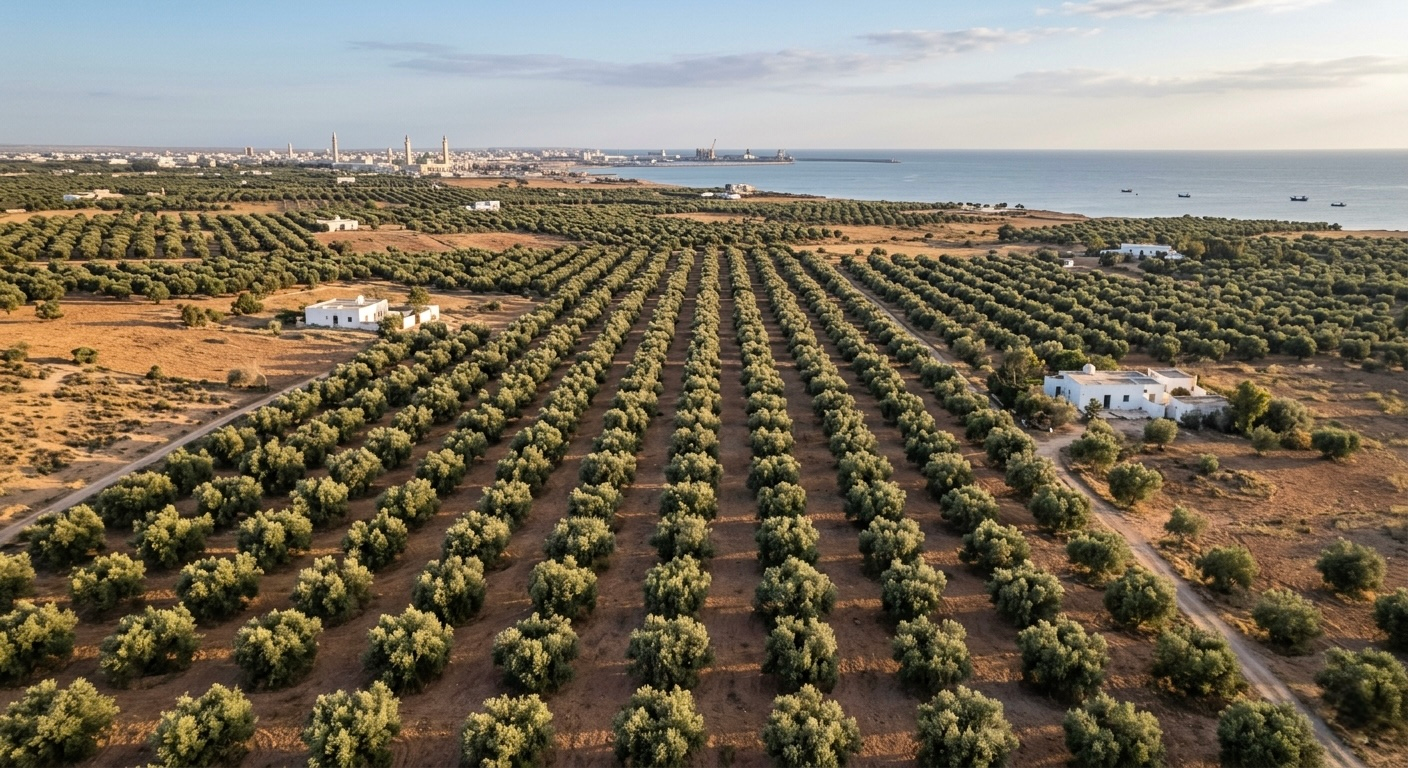
The science behind the bitterness, and why high-polyphenol oil is worth seeking. When a fresh olive oil bites at the back of your throat, that is not a flaw in the oil. It is the most direct sensory evidence that the oil contains something of value.
What Polyphenols Are
Polyphenols are secondary plant metabolites — compounds produced not for the plant's primary metabolic functions but as a defence system against UV radiation, pathogens, oxidative stress, and drought. In olive oil, the principal polyphenols are oleocanthal, oleuropein, hydroxytyrosol, and tyrosol. These are the compounds that give fresh, high-quality extra virgin olive oil its characteristic bitterness and pungency. They are also the compounds that degrade with heat, age, light, and oxygen — which is why the conditions of extraction and storage are not procedural details but direct determinants of what ends up in the bottle.
The concentration of polyphenols in olive oil varies considerably by variety, harvest timing, climate, and extraction method. A standard supermarket extra virgin oil might contain 80–150 mg/kg of total polyphenols. A well-made early-harvest oil from a high-polyphenol variety can reach 500–800 mg/kg. These are not comparable products. The name on the label may be the same. The contents are not.
Oleocanthal: The Compound That Bites
Oleocanthal was identified as a distinct compound by Gary Beauchamp and colleagues, whose findings were published in Nature in 2005. The paper described a striking observation: oleocanthal functions via a mechanism similar to ibuprofen in its inhibition of cyclooxygenase enzymes — the same pathway through which non-steroidal anti-inflammatory drugs operate. The paper's title was characteristically dry. The implication was not: a naturally occurring compound in fresh olive oil shares a pharmacological pathway with one of the world's most widely used anti-inflammatory medications.
The practical indicator of oleocanthal in the glass is familiar to anyone who has tasted genuinely fresh, high-quality extra virgin olive oil: the cough, or the catch in the throat, that arrives a second or two after swallowing. This is not an irritant in the conventional sense. It is oleocanthal interacting with the same receptors at the back of the throat that ibuprofen engages. The more pronounced this sensation, the higher the oleocanthal concentration. A mild oil with no throat-catch contains little oleocanthal. This is not a sign of refinement — it is a sign of absence.
a quality signal, not a warning.
Oleuropein and Hydroxytyrosol
Oleuropein is the dominant polyphenol in the olive fruit itself — present at much higher concentrations than in the extracted oil, which is why whole olives are intensely bitter before curing. During the pressing process, oleuropein undergoes enzymatic hydrolysis, breaking down into hydroxytyrosol among other products. Hydroxytyrosol is one of the most bioavailable antioxidants identified in any food source: the body absorbs and uses it with unusual efficiency. It scavenges free radicals, protects cell membranes from oxidative damage, and has been studied in the context of cardiovascular health, though AL WASAT makes no medical claims and we note that research in this area is ongoing and context-dependent.
What the evidence does support — and what the European Food Safety Authority has acknowledged in its approved health claims — is that the hydroxytyrosol derivatives in olive oil contribute to the protection of blood lipids from oxidative stress. The EFSA claim threshold is 5 mg of hydroxytyrosol and its derivatives per day, achievable from roughly two tablespoons of a qualifying oil. The oil must contain a minimum of 250 mg/kg of these compounds to carry the claim.
Why High-Polyphenol Oils Cost More
Producing high-polyphenol oil is expensive at every stage and forgiving at none of them. Early harvest — before the olive fully ripens and its polyphenol content begins to fall — means lower oil yield per tonne of fruit. A ripe olive yields more oil. An early-harvest olive yields better oil. The economics of this trade-off are clear, and they do not favour the producer who is paid by the litre rather than the quality tier.
Cold extraction — keeping the olive paste and extracted oil below 27°C throughout the process — preserves polyphenols that would otherwise be degraded by heat. Heat increases yield; it reduces phenolic content. The faster a mill can process fruit after harvest, the less time the olives spend degrading in crates. Every hour between tree and crusher is a loss. Immediate bottling in dark glass, away from oxygen and light, protects what the extraction preserved. And shelf life is genuinely shorter for high-polyphenol oil — these compounds are active, not inert, and they change over time. An oil at eighteen months is a different product from the same oil at six months.
Reading a Label
The EU health claim threshold for hydroxytyrosol and its derivatives is 250 mg/kg. Oil that qualifies may carry the approved claim on its label. This is the regulatory floor. Oils meaningfully in the high-polyphenol category typically test above 300 mg/kg of total polyphenols. AL WASAT batches test between 380 and 620 mg/kg depending on the harvest year, the specific grove, and extraction conditions — ranges confirmed by independent laboratory analysis, not producer self-reporting.
The number to look for is total polyphenols, measured in mg/kg. Some labels report only oleocanthal or hydroxytyrosol separately; these are legitimate but partial figures. A total polyphenol count using the Folin-Ciocalteu method gives the broadest, most comparable reading. If a label does not publish this figure, that absence is itself informative. There is no reason to omit a number that reflects well on the product.
The Bitterness-Quality Link
Most consumers in Britain and northern Europe arrive at olive oil having been trained — by supermarket shelves, by restaurant culture, by decades of mild, inoffensive blended oil — to associate quality with smoothness. Smooth means refined, or old, or both. Mild means the volatile compounds have departed and the polyphenols have degraded. The oil that presents no bitterness, no pepper, no throat-catch, and no green aromatic character is telling you, accurately, that these things are no longer present.
Bitterness in extra virgin olive oil is a quality signal, not a defect. It is the International Olive Council's classification of olive oil that makes this explicit: bitterness and pungency are positive attributes in professional tasting assessment. They are scored on a scale of intensity. An oil with none scores poorly. The consumer who reaches for the lighter bottle because the robust one seemed too strong has been misdirected by a market that selected for inoffensiveness. Inoffensive and good are not synonyms here.
Why We Publish the Numbers
AL WASAT publishes polyphenol counts because you should know what you are paying for. Every batch is independently tested. The results go on the label. This is not a gesture toward transparency — it is transparency itself. When a producer declines to test, or tests but withholds results, or uses internal testing rather than accredited third-party laboratories, these are choices that have a single rational explanation: the number does not support the price.
Our numbers do. The bitterness you taste is measurable. The throat-catch is measurable. The antioxidant content is measurable. The harvest date is documented. None of this requires you to take our word for it. The analysis sheet exists. We would prefer that you read it.